
Understanding material properties requires knowledge of the local atomic arrangement, which can be probed using Pair Distribution Function (PDF) analysis based on X-ray, neutron, or electron diffraction. Amorphous and nanocrystalline materials can be studied using the electron Pair Distribution Function (ePDF) technique in a Transmission Electron Microscope (TEM), enabling analysis at the nanometer scale with millisecond acquisition times for single diffraction patterns—offering a significant advantage over conventional X-ray PDF methods.
With recent advances in 4D-STEM / 4D-SPED methodologies, it is now possible to generate high-resolution, spatially resolved ePDF maps at the nanometer scale—surpassing the spatial resolution of other PDF-based techniques.
While ePDF patterns closely match X-ray PDF results, dynamical diffraction effects can influence the peak intensities (heights) of the transformed ePDF, while peak positions remain unchanged. Recent studies have shown that Precession Electron Diffraction (PED) effectively reduces these dynamical effects in nanocrystalline materials, improving the reliability of ePDF analysis, while having no significant influence on amorphous materials.
Principle of the Pair Distribution Function (PDF)
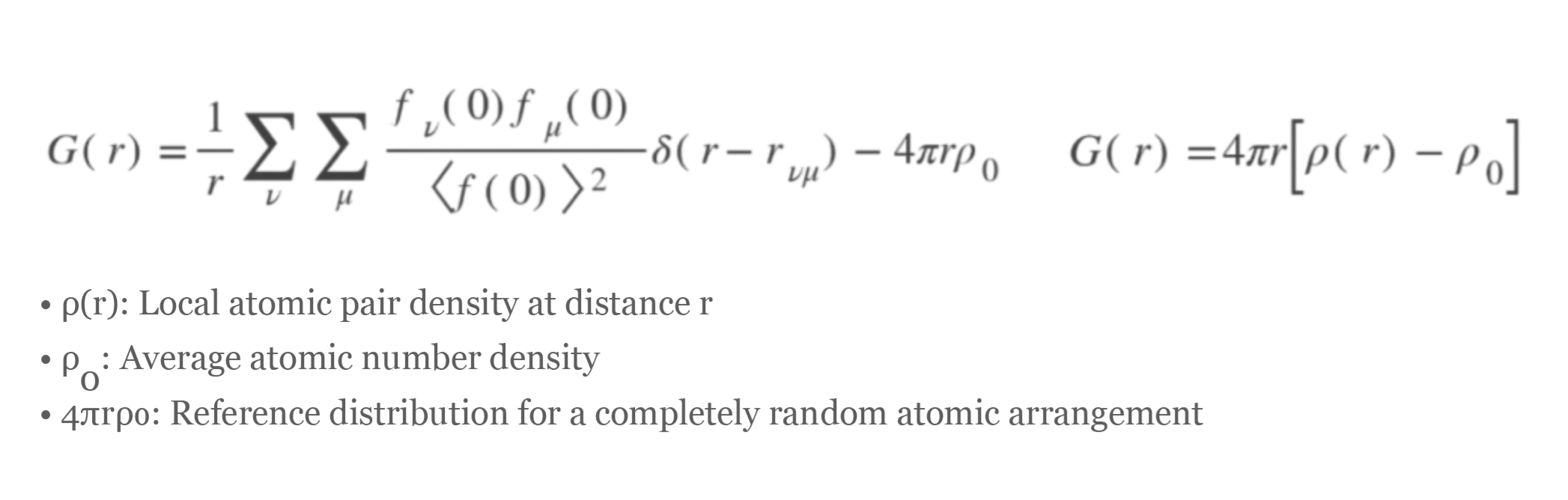
Interatomic distances r give rise to peaks in the pair distribution function G(r).
The position of each peak corresponds to a specific atomic distance, while the area under the peaks relates to the number of neighboring atoms, scaled by their scattering power.
Direct Calculation of G(r) in Real Space
G(r) can be directly calculated from a crystal structure model in real space:
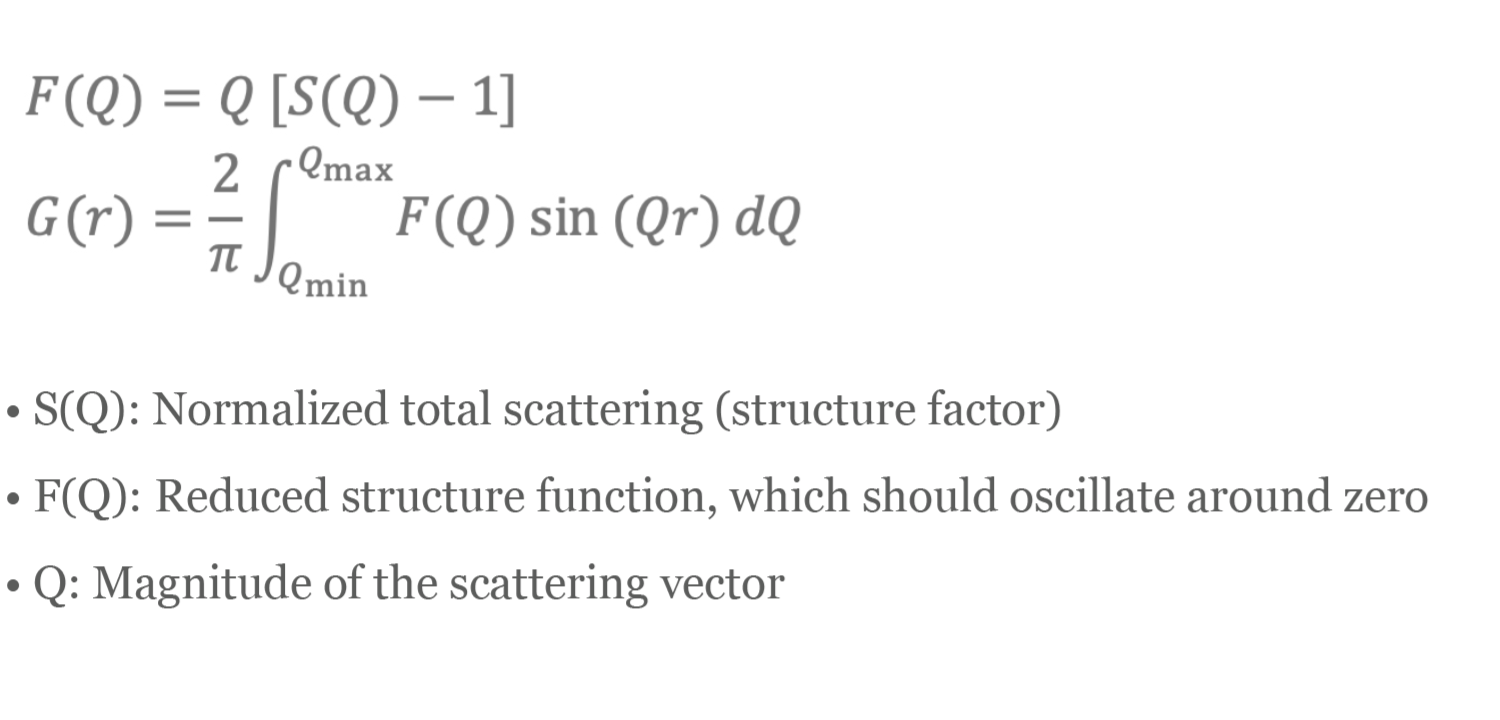
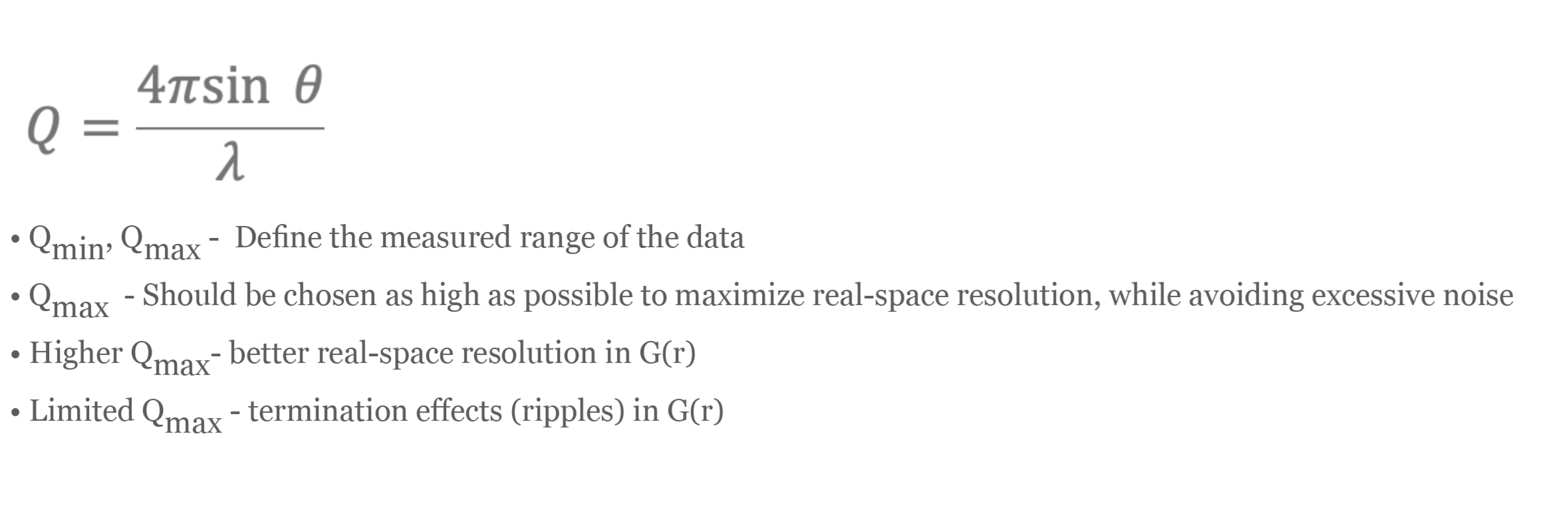
From Reciprocal Space to Real Space: Calculation of G(r)
The PDF is obtained via Fourier transformation of the total scattering data:
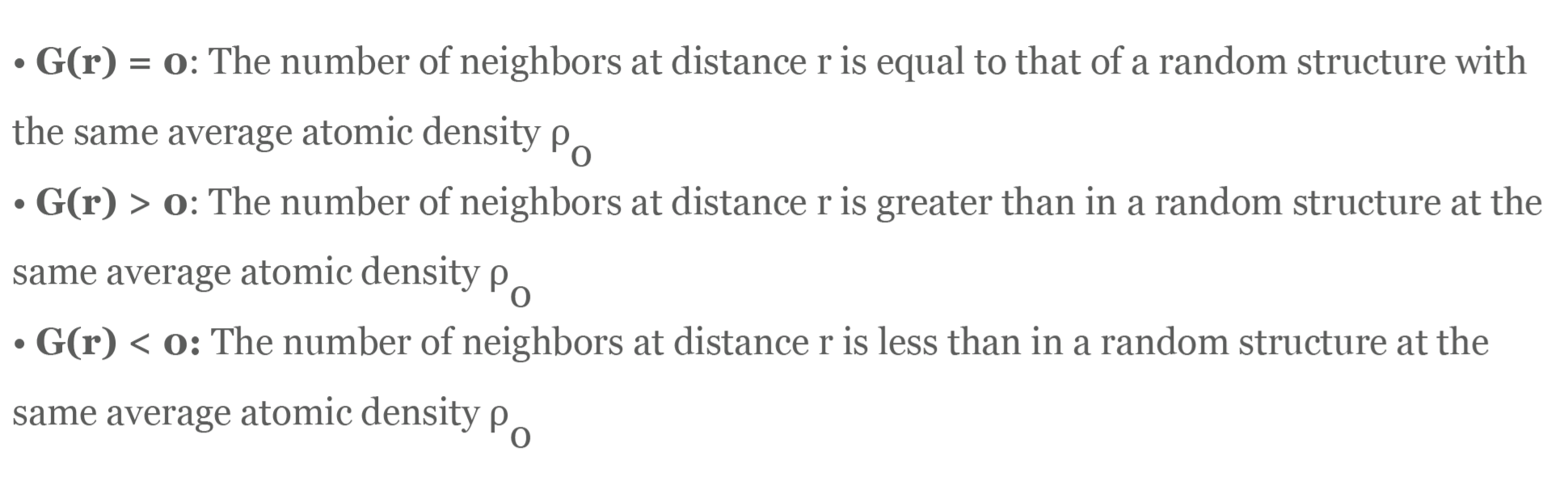
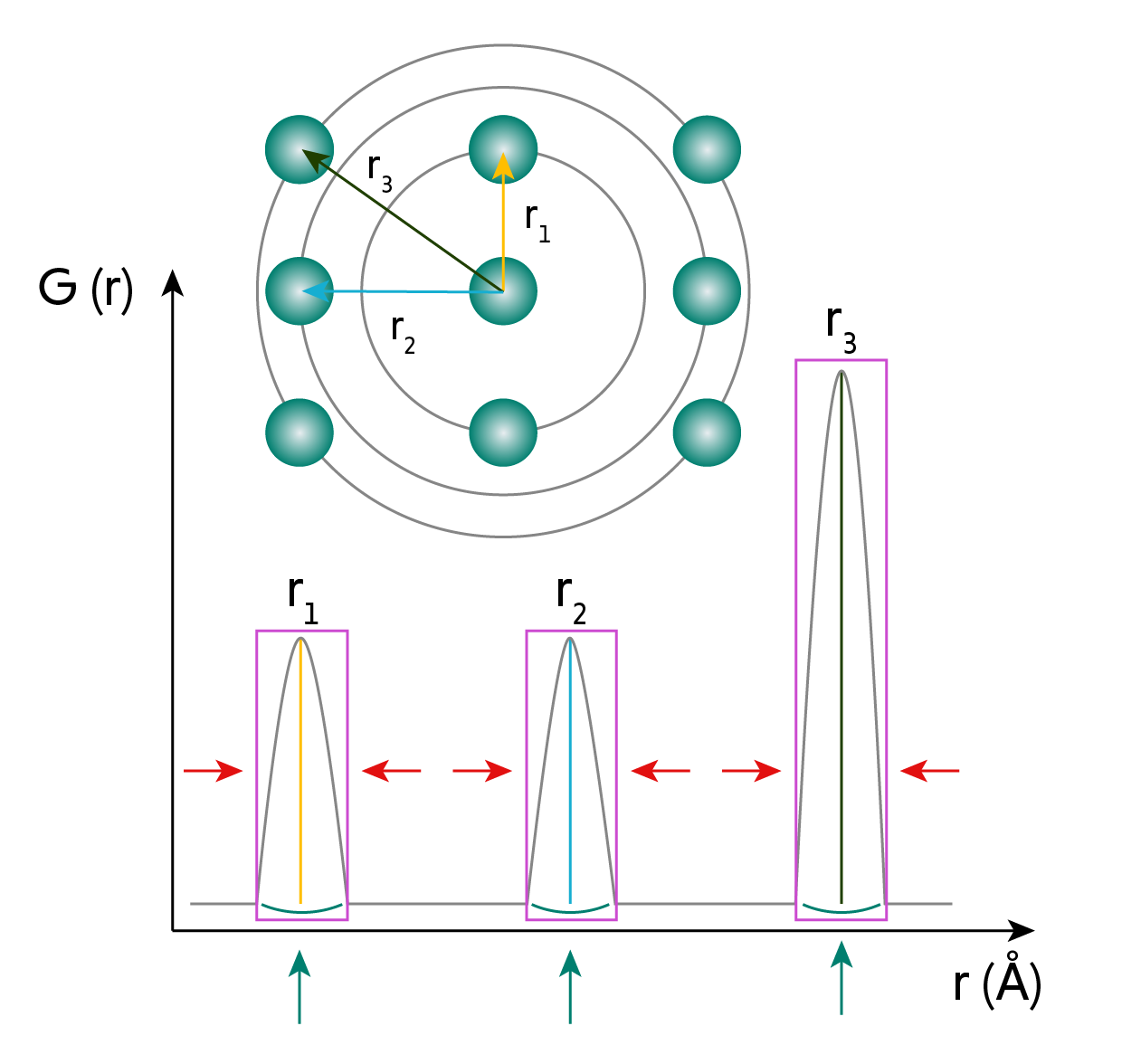
- Peak position: Indicates the interatomic distance (e.g., bond length) and can aid in phase identification.
- Peak width: Reflects the distribution (spread) of atomic distances, providing information on structural disorder.
- Peak height: Related to the coordination number, indicating how many atoms are found at a given distance.
Why ePDF in TEM is important
Works with very small sample volumes, including fine powders or FIB-prepared lamellae on a TEM grid.
Enables combined analysis of imaging (TEM/STEM), diffraction, and chemistry (EDS/EELS) from the same region.
A nanometer-scale probe allows spatially resolved, high-resolution PDF analysis.
Compatible with most TEMs equipped with CCD/CMOS or direct electron detection cameras.
Short acquisition times; compatible with in situ / operando experiments (heating, biasing, gas/liquid environments).
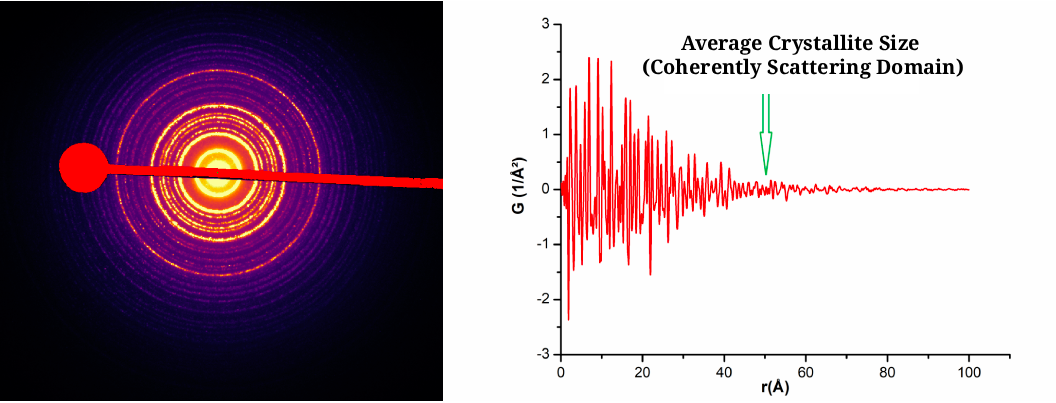
ePDF obtained from a nanoparticle, enabling analysis of local atomic order and average crystallite size
Case Study: Revealing Nanoscale Amorphous Structure with ePDF Mapping
The ePDF Mapping software enables spatially resolved, high-resolution analysis of amorphous, semicrystalline, and nanocrystalline materials to investigate structural heterogeneity using 4D-SPED / 4D-STEM diffraction data. In these techniques, a focused electron probe (≈1–10 nm) scans the sample with fine step sizes (≈1–3 nm), enabling spatial resolutions down to ~1 nm, depending on the microscope and experimental conditions. The software has been developed in collaboration with Prof. Simon J. L. Billinge (formerly Columbia University, New York; currently Professor and Director of the California NanoSystems Institute (CNSI), University of California, Santa Barbara).
The software extracts real-space structural information via the electron Pair Distribution Function (ePDF) from 2D diffraction patterns collected in a TEM, providing access to interatomic distances and the extent of short- and medium-range atomic ordering. It performs automated masking of crystalline spots, diffraction center determination, radial integration, and pixel-by-pixel G(r) calculation across scanned areas.
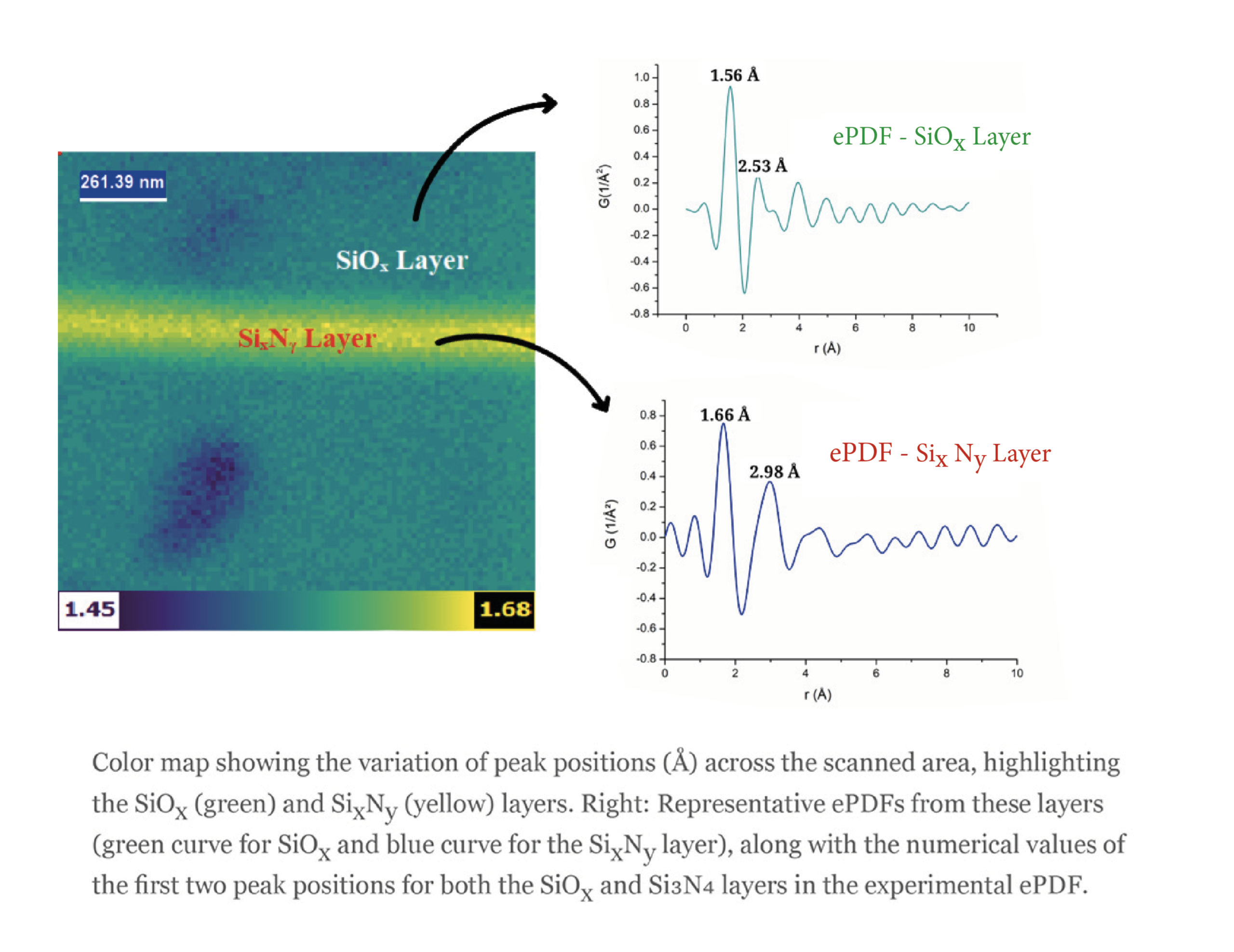
The software generates Pearson correlation maps and Quantity of Interest maps (e.g., maps based on peak position, width, height, or integrated area obtained from Gaussian fitting) to visualize spatial variations in local structure and interatomic distances. It also provides 2D waterfall plots and supports interactive peak fitting for detailed structural analysis. Experimental ePDFs can be directly compared with simulated PDFs from CIF files for structure validation.
ePDF Mapping is ideally suited for amorphous layers and interfaces in semiconductor devices, pharmaceutical amorphous solid dispersions, polymers, glasses, nanoparticles, and catalysts, enabling phase identification, interface analysis, detection of local crystallinity, and assessment of structural homogeneity and process reproducibility.
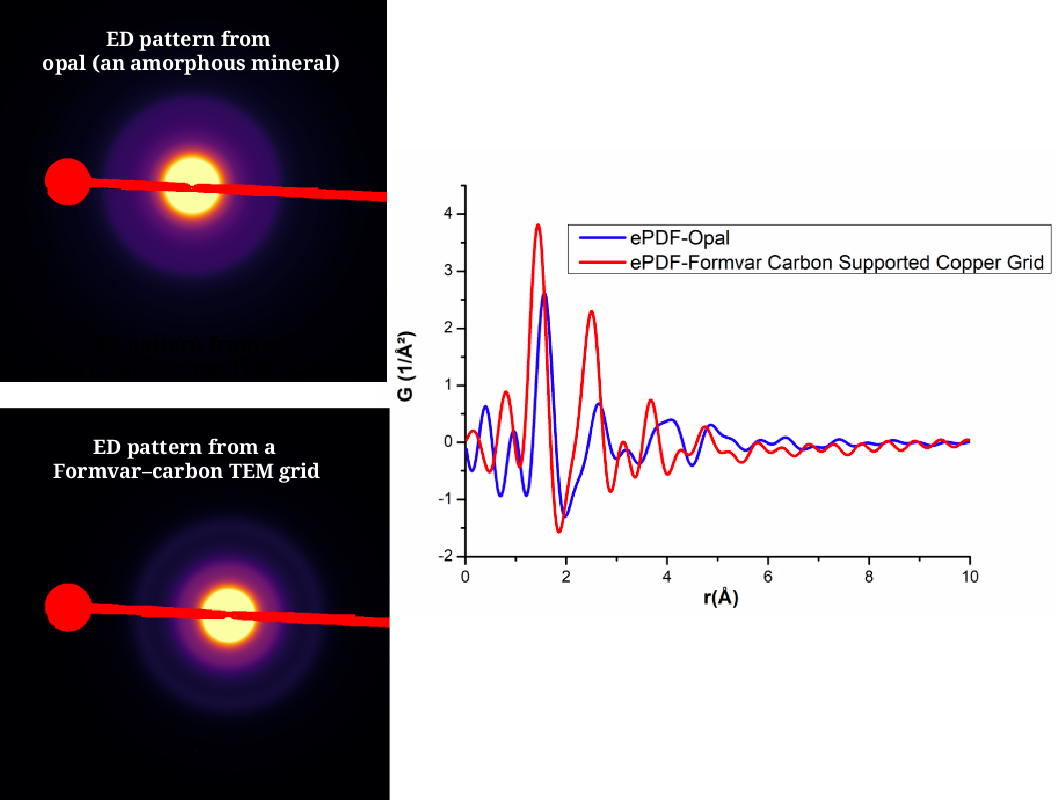
Case Study: ePDF comparison of two amorphous materials with distinct interatomic distances: insights into phase identification and local atomic order
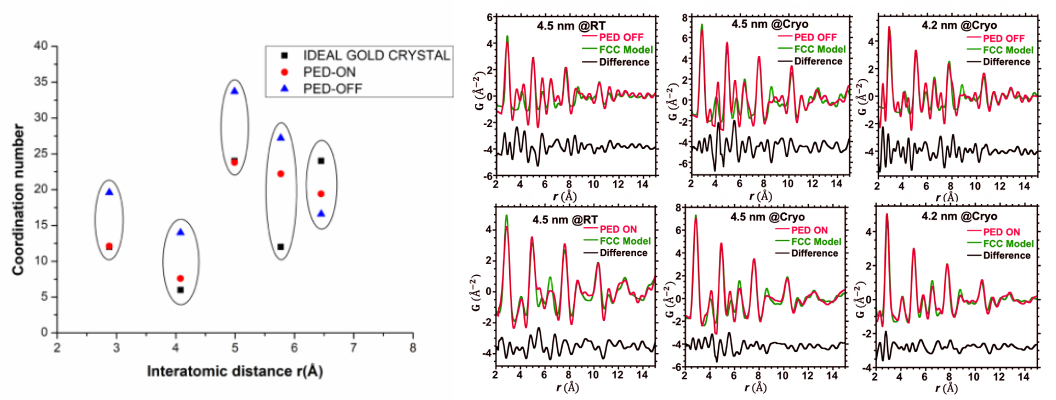
Case study: High-reliability coordination number analysis from nanoparticle e-PDF enabled by electron-beam precession
In order to assess the impact of precession electron diffraction (PED) on ePDF analysis, ligand-protected gold nanocrystals (~4–5 nm) were investigated by M. Mozammel Hoque et al. (Prof. Arturo Ponce’s group, University of Texas at San Antonio, USA) using electron diffraction data acquired with and without precession.
The experimental ePDFs were compared with different structural models to evaluate their sensitivity to atomic arrangements, including monocrystalline and multiply twinned structures. The results demonstrate that PED significantly improves the reliability of ePDF data, enabling clear discrimination between structural motifs and reducing residual errors.
A reduction in residuals from ~46% to ~29% is observed with PED, further improved to ~23% when combined with low-temperature measurements, approaching the accuracy of X-ray PDF analysis. Additionally, PED enhances the determination of coordination numbers, confirming its potential for quantitative structural analysis of metallic nanocrystals.
Ref:
Hoque et al., J. Phys. Chem. C, 2019, 123, 19894–19902
https://doi.org/10.1021/acs.jpcc.9b02901
Corrêa et al., ACS Appl. Nano Mater., 2021, 4, 12541–12551
https://doi.org/10.1021/acsanm.1c02978
Corrêa et al., Part. Part. Syst. Charact., 2025, 70016
DOI: https://doi.org/10.1002/ppsc.202500031
Our results show that e-PDF (electron Pair Distribution Function) analysis in TEM is an effective technique for studying local crystal order in amorphous and nanomaterial systems, as well as for phase identification. Dynamical diffraction affects ED intensities and e-PDF peak heights but does not influence peak positions, which correspond to interatomic distances. The application of PED significantly impacts e-PDF peak heights (as demonstrated for ligand-protected gold nanocrystals), enabling more reliable determination of local coordination numbers. Furthermore, recent developments in ePDF mapping allow spatially resolved analysis, providing insights into nanoscale structural heterogeneity. These findings support the broader adoption of e-PDF in TEM for studying nanoparticles and disordered materials.
WEBINARS
Local structure at the nanoscale (e-PDF)
Prof. Simon Billinge , Columbia University

Structural Characterization in TEM by Electron Pair Distribution function (e-PDF)
Dr. Partha Das Application Scientist NanoMEGAS Belgium

